|目錄|
|
|
1. What are “heirs by order of inheritance” under Article 1138 of the Civil Code?
|
Order
|
Designation
|
附註
|
|---|---|---|
|
First order
|
Lineal descendants by blood
|
|
|
Second order
|
Father and mother
|
|
|
Third order
|
Siblings
|
|
|
Fourth order
|
Grandparents
|
|
2. Key Concept: Only Persons with the Right to Inherit Are Eligible to Claim Waiver of Inheritance
-
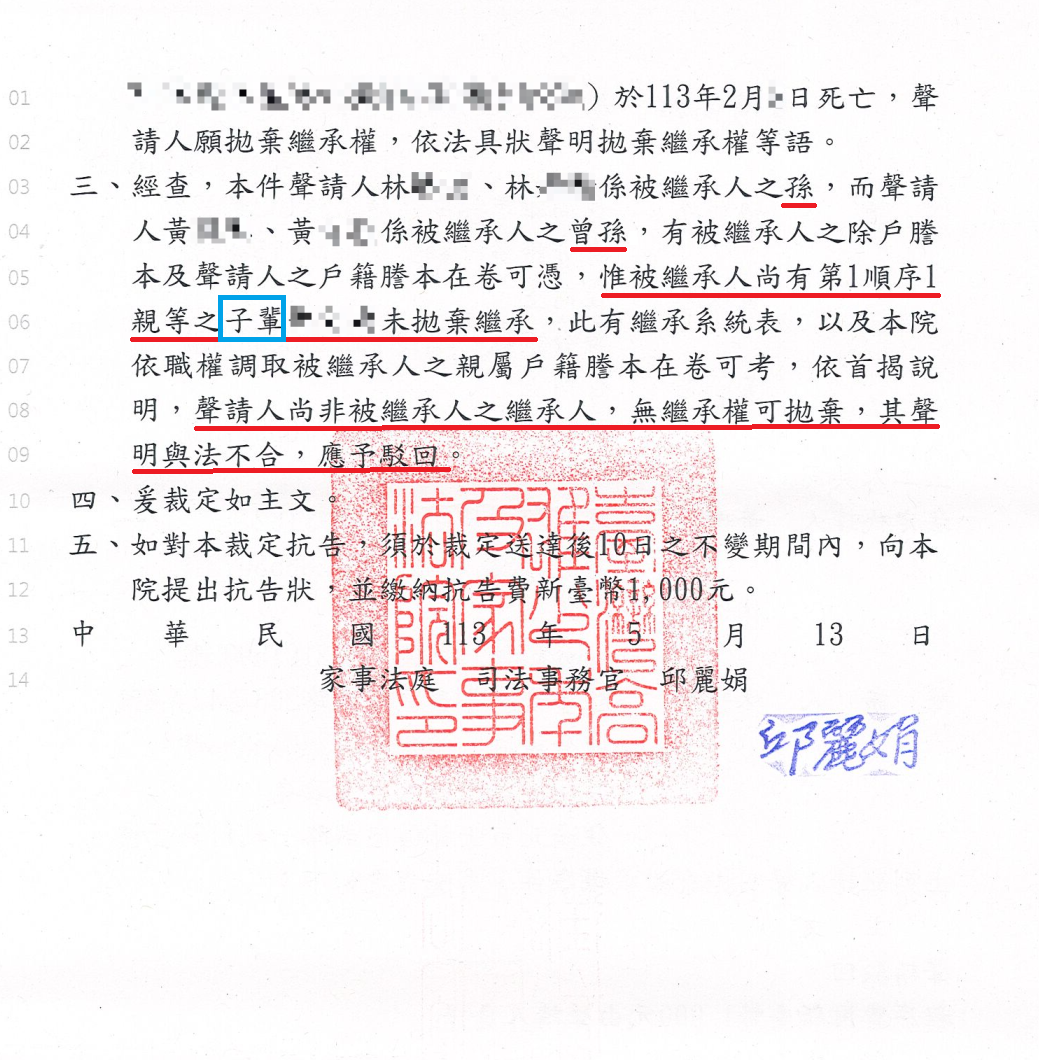
If the grandchildren in the first order do not yet have the right to inherit because the child-generation heirs have not all waived inheritance, those grandchildren naturally do not need to waive inheritance. Even if they do so, the court will “reject” the application.
-
Among all first-order and second-order heirs, if any one heir does not claim waiver of inheritance or does not claim waiver of inheritance with the court within three months from becoming aware of the right to inherit, the third-order siblings will not have the right to inherit at all. They therefore do not have the status of heirs and naturally do not need to waive inheritance.
3. Key Points on Waiver of Inheritance for Heirs by Order of Inheritance
-
As long as one first-order heir exists and has not waived inheritance, the second-, third-, and fourth-order heirs do not need to waive inheritance.
-
Within the first order, as long as one child-generation heir has not waived inheritance, all grandchild-generation heirs cannot waive inheritance.
- Within the first order, as long as one grandchild-generation heir has not waived inheritance, all great-grandchild-generation heirs cannot waive inheritance.
- Within the first order, as long as one great-grandchild-generation heir has not waived inheritance, all great-great-grandchild-generation heirs cannot waive inheritance.
-
- As long as one second-order heir exists and has not waived inheritance, the third- and fourth-order heirs do not need to waive inheritance.
- As long as one third-order heir exists and has not waived inheritance, the fourth-order heirs do not need to waive inheritance.
4. Key Points on Waiver of Inheritance for the Spouse
-
Whether or not the spouse waives inheritance does not affect the waiver of inheritance by heirs by order of inheritance.
- Whether or not heirs by order of inheritance waive inheritance also does not affect the spouse’s right to waive inheritance.
- The spouse is not an heir by order of inheritance. Instead, the spouse inherits the decedent’s claims and debts together with the heirs by order of inheritance.
- If the spouses have already divorced, the natural heirs do not include the spouse, meaning the former husband or former wife.
5. Who Exactly Are the Heirs of the Decedent?
7. Waiver of Inheritance by Grandchildren in Per Stirpes Inheritance
6. When Do Grandchildren Need to Waive Inheritance?
-
For example, if the grandfather passes away, and the father, all uncles, and aunts have waived inheritance as child-generation heirs, then all grandchildren will become entitled to inherit. Only at this point can the grandchildren choose whether to claim waiver of inheritance.
-
Even if only one child-generation heir has not completed waiver of inheritance, the grandchildren will not be heirs and therefore do not need to waive inheritance. This is because the child-generation heir who has not waived inheritance is the only heir among the heirs by order of inheritance.
- Assuming the grandmother is still alive, whether or not she waives inheritance does not affect the result described above, because the spouse is an independent natural heir and is not an heir by order of inheritance.
7. Waiver of Inheritance by Grandchildren in Per Stirpes Inheritance
-
For example, if the grandmother passes away, and the father of grandson A, who is a child-generation heir, passed away before the grandmother, per stirpes inheritance occurs at the moment the grandmother passes away. In other words, A was originally only a grandchild and did not have the right to inherit. However, because of per stirpes inheritance, A’s status changes from that of a grandchild to that of a child-generation heir, and A inherits together with the uncles and aunts. Since A has the right to inherit, A may of course choose whether to claim waiver of inheritance.
- Even if A waived inheritance when A’s father passed away, this does not affect A’s right to inherit when the grandmother passes away through per stirpes inheritance. These are completely separate matters. Please do not confuse them.
8. Relatives by Marriage Do Not Need to Waive Inheritance
-
For example, if the father passes away, the daughter-in-law or son-in-law is not among the heirs by order of inheritance, and therefore does not have the right to inherit. Accordingly, they do not need to claim waiver of inheritance with the court.
-
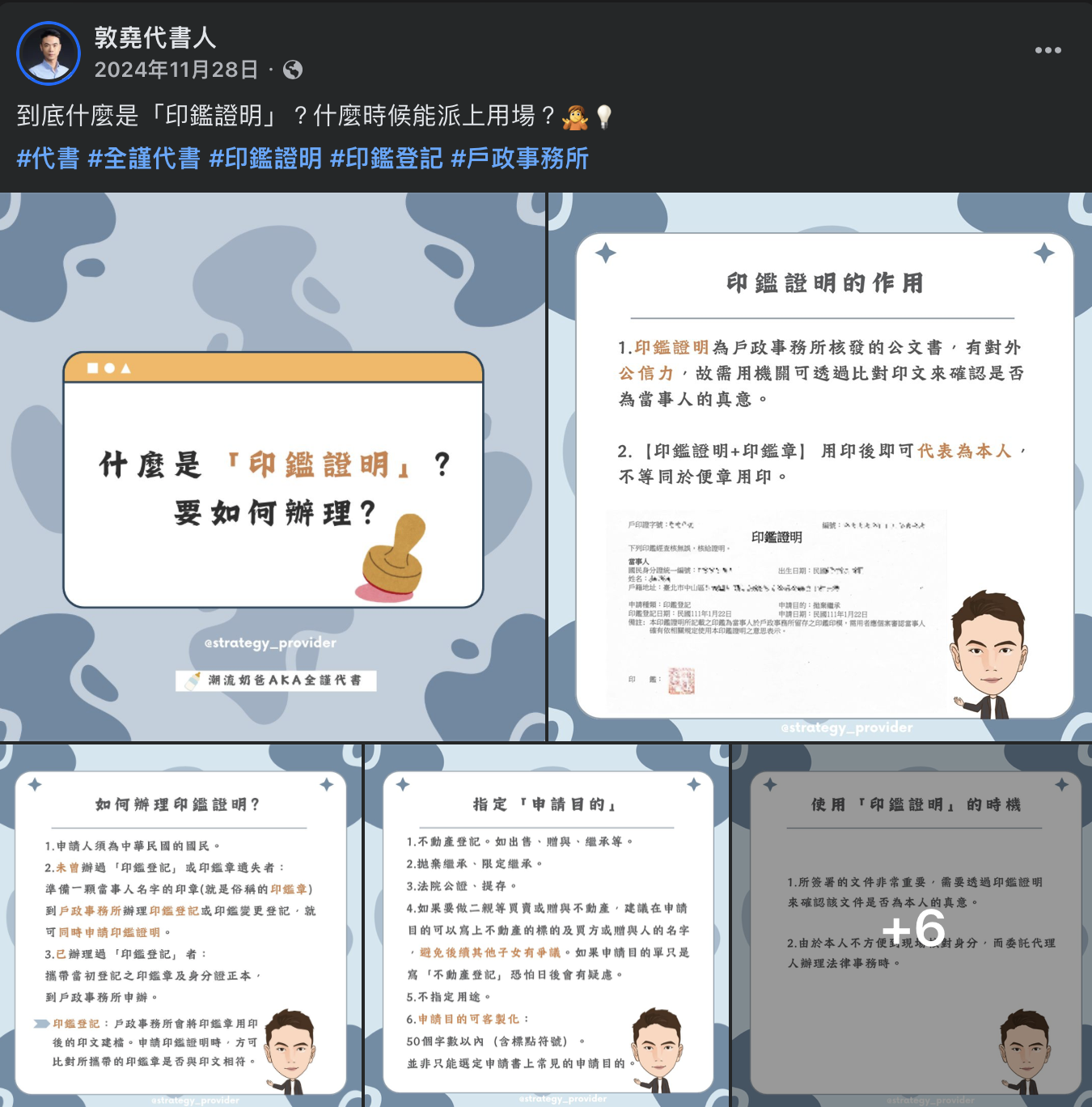
Usually, when a land administration agent asks a daughter-in-law or son-in-law to prepare a seal registration certificate and household registration transcript, it is because they have a “minor child,” and the legal representative must perform the legal act, namely waiver of inheritance, on behalf of the minor child. It is not because they themselves are heirs claiming their own qualification to waive inheritance.
- Even in the case of divorce, if the former daughter-in-law or son-in-law still has custody of the minor child, whether joint or sole custody, they must still prepare a seal registration certificate and household registration transcript, and represent the minor child in claiming waiver of inheritance with the court.
9. Nephews and Nieces Do Not Need to Waive Inheritance
-
The children of siblings under Article 1138 of the Civil Code do not have the right to inherit, and naturally do not need to waive inheritance.
-
For example, if your aunt or uncle passes away, you do not need to claim waiver of inheritance with the court.
-
Child-generation heirs and grandchildren only arise among first-order lineal relatives by blood.
10. Do Daughters-in-Law and Sons-in-Law Also Need to Waive Inheritance?
-
Daughters-in-law and sons-in-law are relatives by marriage. Relatives by marriage never have the right to inherit, so they do not need to claim waiver of inheritance.
-
However, if there is a minor child and the daughter-in-law or son-in-law is the guardian, then the daughter-in-law or son-in-law is the legal representative. They must represent the minor child together with the spouse or former husband or wife in claiming waiver of inheritance with the court. Therefore, they must also apply for their own seal registration certificate and household registration transcript at the Household Registration Office.
-
Therefore, do not confuse the issue. Providing a seal registration certificate and household registration transcript to a land administration agent for handling waiver of inheritance does not mean that you necessarily have the right to inherit.

(1).png)

.png)