
After a family member passes away, in addition to applying for a death certificate, it is also very important to apply for household deregistration, namely death registration, and a household deregistration transcript at the Household Registration Office. The death certificate and household deregistration transcript function like a pair of essential documents, and both may be needed in inheritance procedures.
|
|
1. What is death registration?
-
According to Article 14 of the Household Registration Act: “Death or the declaration of death shall be registered.” This means that when a family member passes away, the family must complete death registration with the household registration authority within 30 days after the death occurs or after the fact of death is confirmed.
-
Household registration personnel will record the deceased person’s date of death and the time of the death registration application in the household registration records. They will also remove the deceased person’s name from the original household certificate. This is regarded as reporting the fact of the person’s death to the government authority.
2. Who can apply for death registration?
-
Spouse
- Relative
- Household head
- Cohabitant
- Person handling funeral matters
- Manager of the house or land where the deceased person died
- Authorized representative
3. Required documents for death registration: What should you bring for household deregistration?
|
Required documents
|
||
|---|---|---|
|
Original death certificate
|
||
|
Applicant’s original national ID card
|
||
|
Applicant’s seal
|
||
|
Deceased person’s original national ID card
|
||
|
Deceased person’s household certificate
|
||
|
If another person is authorized to handle the matter, a power of attorney must be attached.
|
-
If another person is authorized to handle the matter, a power of attorney must be attached.
-
Relatives, spouse, or persons in the same household may apply online. Other applicants must apply in person at the counter.
-
The applicant must be at least 20 years old, or married and at least 18 years old, and must hold a Citizen Digital Certificate.
-
The deceased person must not be the household head, except in the case of a single-person household.
-
The deceased person must have died in Taiwan, with a death notification from the Ministry of Health and Welfare, Ministry of Justice, Ministry of National Defense, or Judicial Yuan. This also includes cases involving a court ruling declaring death.
-
The application must be made within 30 days after death or within 30 days after the ruling declaring death becomes final. If the deadline has passed, the application must still be handled in person at the Household Registration Office.
Required document: the applicant’s Citizen Digital Certificate.
5. Restrictions on online registration
-
Online applications are limited to death registration only. Other matters, such as replacing the household certificate or returning the national ID card, must still be handled at the household registration authority.
6. Notes on death registration
-
Death registration must be completed within 30 days from the date of death. If it is not completed within the statutory deadline, a fine of NT$300 to NT$900 may be imposed.
| Statutory reporting period: within 30 days. | Days overdue | Fine |
|---|---|---|
|
Fines for failing to apply within the statutory period without justifiable reason.
|
More than 1 day but not more than 15 days overdue
|
假日價NT$300
|
|
More than 16 days but not more than 30 days overdue
|
NT$500
|
|
|
More than 31 days but not more than 180 days overdue
|
NT$700
|
|
|
More than 181 days overdue
|
NT$900
|
|
|
Those who still fail to apply after being notified
|
NT$900
|
|
|
平日價NT$9,000
|
假日價NT$10,300
|
7. What is a household deregistration transcript?
-
After the death registration described above is completed, household registration personnel will usually ask whether you also wish to apply for a household deregistration transcript. A household deregistration transcript, also known as a household deregistration certificate, can prove that the deceased person has been removed from the household registration records and is also treated as the deceased person’s identity document.
8. What should you bring when applying for a household deregistration transcript or certific
-
If death registration has not yet been completed, please first refer to the required documents for death registration listed above.
-
If the party concerned or an interested party applies in person, the original identity document must be submitted for verification. An interested party must also submit the original document proving their interest for verification.
-
If the application is made by an authorized representative, the representative must submit the original identity document for verification and a power of attorney issued by the principal. If the principal is an interested party, the original document proving the interest must also be submitted for verification. However, if there are special reasons that make it difficult to submit the original document proving the interest, a photocopy may be submitted instead. The principal must also declare that the copy is identical to the original and that they are willing to bear legal liability if the statement is untrue, with the principal’s signature or seal.
-
The identity documents referred to in the preceding paragraph include a national ID card, Alien Resident Certificate, Taiwan Area Resident Certificate, permanent residence certificate, Republic of China passport, or other documents sufficient to prove identity.
9. Does a household deregistration transcript have an expiration date?
-
There is a statutory deadline for handling household deregistration online. The online application must be made within 30 days after the family member’s death or within 30 days after the ruling becomes final. If the deadline has passed, the matter must be handled at the Household Registration Office.
-
The household deregistration transcript itself has no expiration date.
10. How many household deregistration transcripts should I apply for?
-
Household deregistration transcript: This contains only the deceased person’s personal information and is used as proof of death. Usually, 10 to 15 copies should be applied for.
-
Full household registration transcript with household deregistration: This proves the relationship between the household and the deceased person. Usually, 3 to 5 copies should be applied for.
-
When household deregistration is completed, household registration personnel will ask whether you wish to keep the national ID card as a memento. If you do not wish to keep it, the personnel will cut off a corner and collect it.
11. What is a household deregistration transcript used for?
-
Like a death certificate, a household deregistration transcript is needed for matters handled after a person passes away. The following are common situations where it is used.
-
Life insurance benefits
-
National Pension death benefits
-
Labor insurance benefits
-
Estate tax filing
-
Inheritance of estate property
-
Real estate inheritance transfer
-
Withdrawal of bank deposits
-
Commercial insurance benefits
-
Vehicle ownership transfer
-
Termination of a mobile phone number
-
-
Usually, when handling inheritance matters, seal registration certificates of all heirs, current household registration transcripts of all heirs, and a new national ID card for the deceased person’s spouse, with the spouse field left blank, will also be applied for at the same time.
-
Because the marital relationship is automatically terminated upon death, the spouse field should be left blank. However, if you do not want it to be blank, you may ask the Household Registration Office to keep the spouse field and add the word “deceased” after it.
-
Because the service hours and regulations of each Household Registration Office may differ, please contact the Household Registration Office in your area for inquiries about related matters.
12. Follow-up procedures when a family member dies in Mainland China
-
If a Taiwanese person dies in Mainland China, the death certificate and cremation certificate issued in Mainland China must be notarized by a notary office in Mainland China and verified by the Straits Exchange Foundation before they can be used in Taiwan for household registration, inheritance, and related matters. If the ashes are brought back to Taiwan and are to be placed in a public columbarium, the cremation certificate must be notarized.
-
In principle, the heirs must file estate tax within six months from the day after the decedent’s death. However, if the decedent died in Mainland China and a death certificate was issued by the relevant authority in Mainland China, the period may be calculated from the date of the verification certificate issued by the Straits Exchange Foundation. The following are the follow-up procedures after a family member dies in Mainland China:
-
Apply for a death certificate from the police station or relevant hospital at the place where the family member died in Mainland China.
-
Obtain the cremation certificate issued by the funeral home that handled the cremation.
-
Bring the original death certificate and cremation certificate to the notary office in Mainland China at the place where the family member died for notarization.
-
After the Straits Exchange Foundation receives the copy of the notarized document sent by the Mainland China Notary Association, bring the notarized original death certificate and cremation certificate to the Straits Exchange Foundation for verification.
-
Bring the verified original notarized death certificate and cremation certificate to the Household Registration Office to apply for household deregistration, namely death registration, and a household deregistration transcript.
►Items 1 to 3 are handled in Mainland China, while items 4 and 5 are handled in Taiwan.
13. Agency service for notarizing a Taiwanese person’s death certificate and cremation certificate in Mainland China
The process for authorizing the notarization and verification of cross-strait documents is as follows:- Step 1: LY Land Administration Agent Office brings the original documents issued in Mainland China, such as the death certificate and cremation certificate, to a local county or city notary office in Mainland China that handles Taiwan-related matters for notarization.
- Step 2: The notary office sends a copy of the notarized document to the provincial, municipal, or autonomous region notary association. The relevant notary association then sends the copy of the notarized document to the Straits Exchange Foundation by official letter.
- Step 3: LY Land Administration Agent Office brings the original notarized document to the Straits Exchange Foundation for verification.
- Step 4: After verification, LY Land Administration Agent Office delivers the verified original notarized document to the client.
- Step 5: The authorized representative then submits the verified original notarized document to the authority that requires it.
|
Documents to be prepared by the client
|
||
|---|---|---|
|
1
|
Original document to be notarized
|
|
|
2
|
Copy of a valid identity document
|
|
|
3
|
Document proving the family relationship, such as a household registration transcript
|
|
|
4
|
Contact address, phone number, and purpose of application
|
|
|
Documents prepared for you by the land administration agent
|
||
|---|---|---|
|
1
|
Power of attorney
|
|
|
Note: If you authorize the land administration agent to handle Taiwan-related matters on your behalf, the content of the power of attorney will be provided separately.
|
||
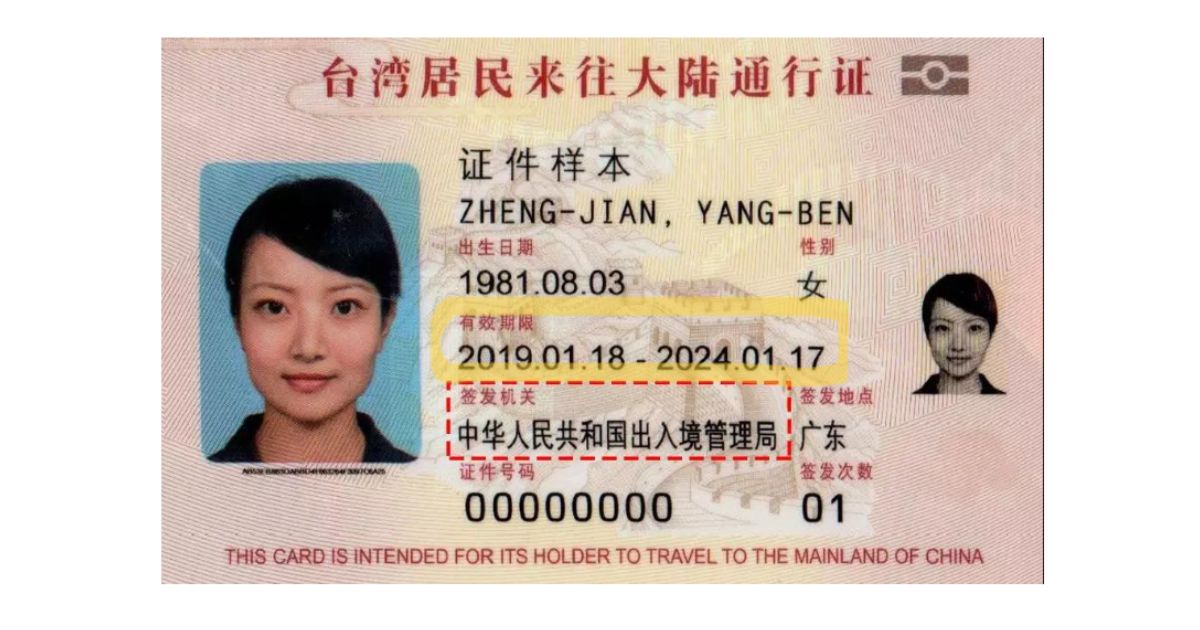
Note: For agency service involving notarization in Mainland China, the client must have a valid Mainland Travel Permit for Taiwan Residents, also known as a Taiwan Compatriot Permit. Passports, travel documents, and landing visas are not accepted.
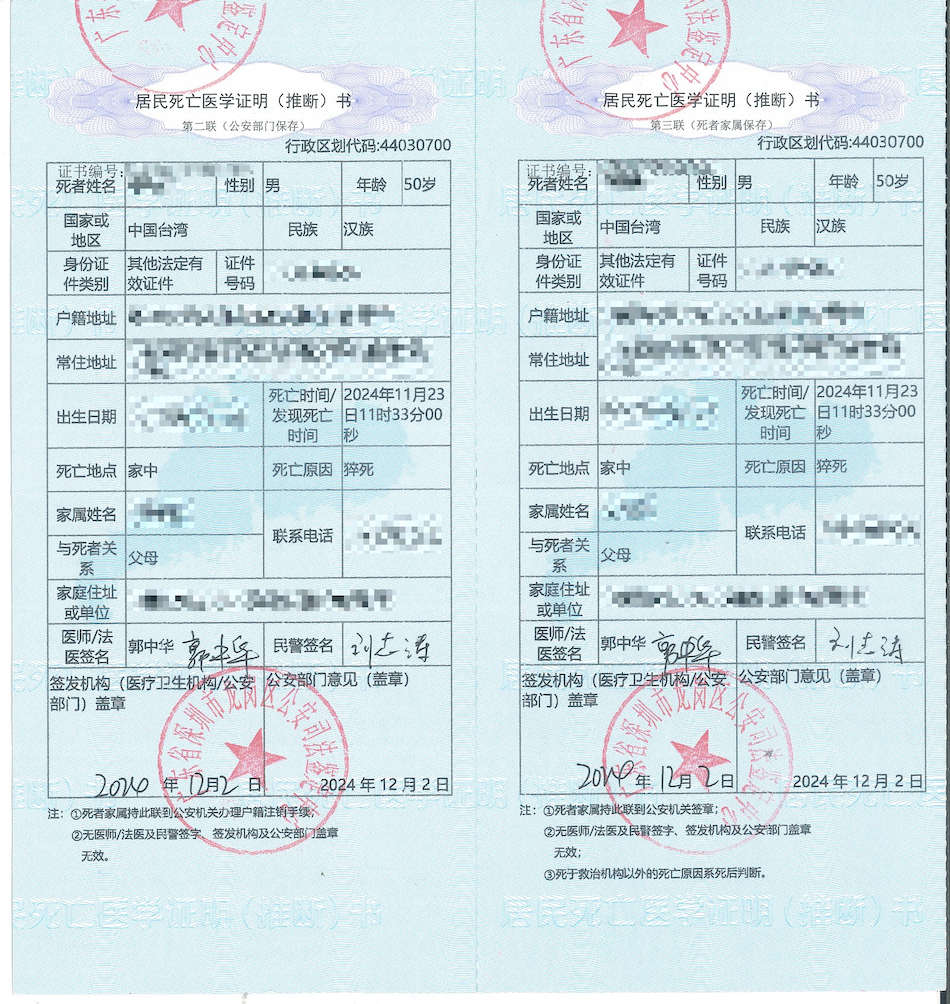
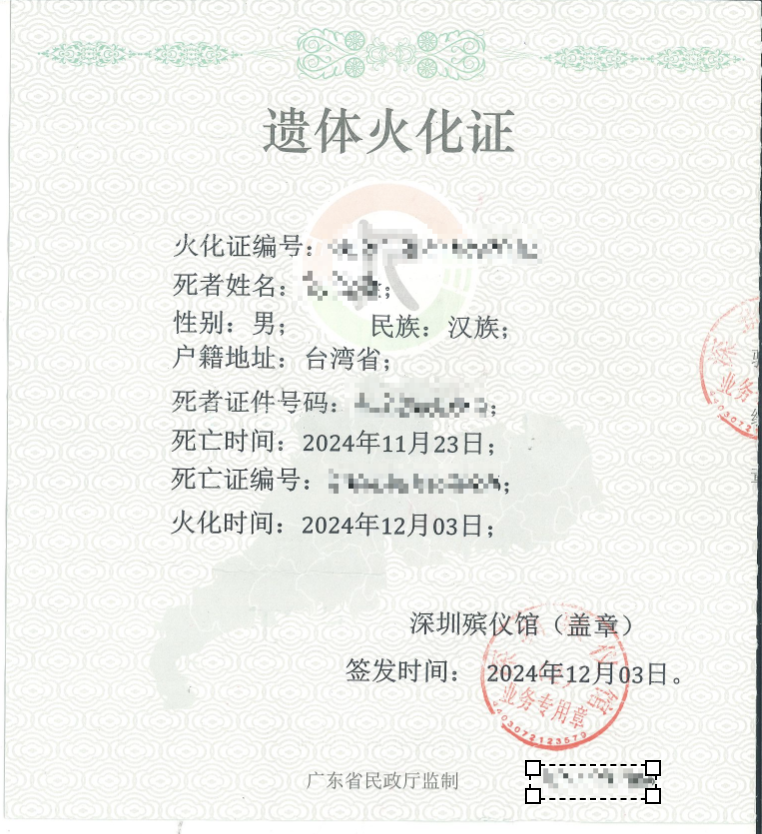
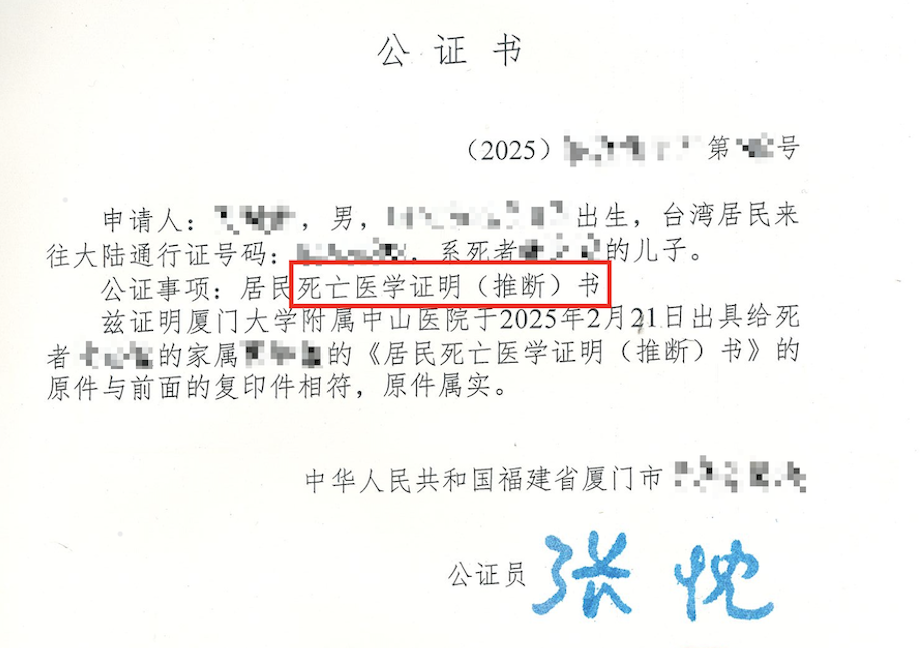
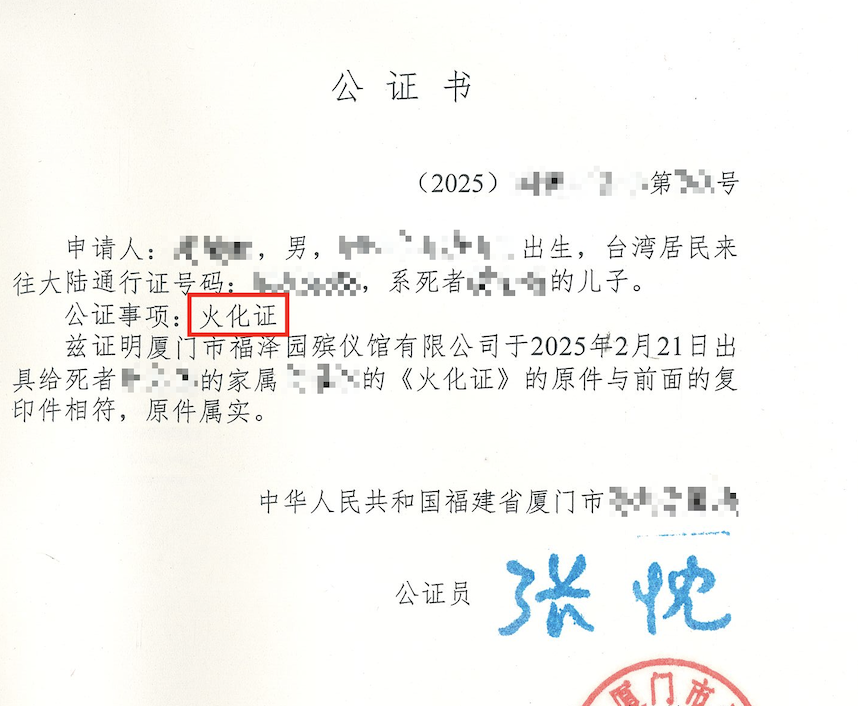
14. Successful case handled by our office: notarization of a Mainland China death certificate and cremation certificate — LY Land Administration Agent Office
Death certificate
Cremation certificate
The notarized document issued by the notary office in Mainland China is shown below.
▲Click to visit the official Instagram account of LY Land Administration Agent Office.
(1).png)

.png)